Shah Lab
  • Home
  • People
  • Join
  • Research
  • Publications
  • News & Updates
  • Resources

The Shah Lab
Ecological and Evolutionary Physiology in a Changing World

Principal Investigator

Picture
CV
Research Gate: Profile
Google Scholar: Profile

Dr. Alisha A. Shah
Assistant Professor
Kellogg Biological Station
Department of Integrative Biology
Ecology, Evolution, and Behavior Program
Research interests: My research interests fall at the nexus of physiology, community ecology, evolution, and climate change. I have a strong passion for the conservation of rivers and other ecosystems, which stems from a lifelong love of the wilderness and an ever-deepening awe of science, beginning in India, where I grew up. I am deeply committed to disseminating my research to the general public through mentoring students, public outreach programs,  presentations, and photography. My ultimate goal is to produce work that will contribute to our understanding of ectotherm communities and their potential response in a time of rapid environmental change.

Lab Staff

Picture
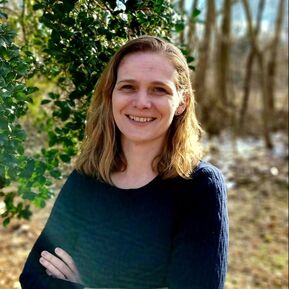
Allyson Hutchens
Lab Manager
Kellogg Biological Station
Research interests: Growing up in rural Michigan, I learned to appreciate the lakes and rivers that surrounded me.  It wasn't until I went out-of-state for my education that I realized how unique Michigan is in its diversity and quantity of freshwater systems. I've always had an interest in nature and environmental science, but decided to study aquatic systems because of my interest in protecting our freshwater resources.  I earned a B.S. in Biology and a M.S. in Aquatic Ecology & Water Quality, after which I began working at KBS.  I have since worked on a variety of projects during my 17 years here, including disease ecology of Daphnia, effects of zebra mussels on harmful algal blooms, thermal tolerance of algae, and many others.  In the Shah Lab, I use my aquatic background to help design research projects, and I am excited to learn more about ectotherm physiology as it pertains to climate change.

Graduate Students

Picture
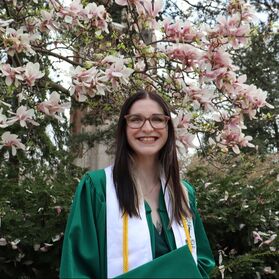
Stephanie Bristow
Ph.D. candidate

Research Interests: Stephanie's dissertation focuses on understanding the joint effects of abiotic and biotic factors on organismal performance in aquatic communities. She explores how temperature stress and predation risk from fish shape thermal performance in damselflies commonly found in ponds and lakes in SW Michigan. 

Picture
Peter Martin
Ph.D. student
Research interests: Peter is interested in understanding the extent to which temperature and oxygen variation shape physiological divergence in aquatic insects. He focuses on damselflies in the family Lestidae that occupy a gradient of habitats from cold, well oxygenated lakes to warm, hypoxic vernal pools. 

Picture
Camille Walsh-Antzak
Ph.D. student
Research interests: Camille works on determining the relative thermal sensitivity of insect hosts and their parasitoids to inform predictions for how these interactions may change under warming. She is is using the well known goldenrod gall fly and its parasitoids as a model.​

Postdoctoral Research Associates

Picture
Dr. Rosemary Martin (2024 - present)
Postdoctoral research associate
Rosie received her PhD from the University of Toronto Mississauga. Her core research involves investigating the effects of warming autumns on the overwintering physiology and energetics of dragonflies. After recently receiving a USDA-NIFA New Directions grant, Rosie and Alisha will also be working with colleagues at Northwest Tribal College in Washington to understand the effects of harmful algal blooms on the survival and thermal physiology of dragonflies. 
Picture
Dr. Minyoung Lee (2025 - present)
Korean National Research Foundation Postdoctoral Fellow
Minyoung received her PhD from Korea University. She primarily focuses on foodwebs as they relate to restored stream habitats. She is investigating how temperature-driven physiological effects cascade through foodwebs and affect predator-prey dynamics and energy flow. Minyoung is co-advised by Alisha Shah, Phoebe Zarnetske, and Christopher Klausmeier. 


​Undergraduates and Post baccalaureates (past and present)

Picture
Evelyn VanDenBerg
REU researcher (2022)
Evelyn studied the thermal and hydric stress tolerance differences in congeneric frogs that vary in their invasive ability. She recently published her research manuscript!
Picture
Abbie Cattermole
URA researcher (2024)
​Abbie used museum specimens to look at the effects of fall and spring warming on dragonfly body size in Michigan over the past 112 years.
Picture
Phoebe Bosch
URA researcher (2025)

​Phoebe compared the critical thermal limits of top fish predators and their damselfly prey to understand how predators and prey differ in thermal sensitivity. Advised by Stephanie Bristow.
Picture
Emily Parker
 Postbac Researcher (2022)
Emily's research focused on the temperature-dependence of feeding rate in the nymphs of different damselfly species.
Picture
Renfield Andrews
URA researcher (2025)
Renfield experimentally tested the effects of artificially enhanced wing pigmentation on body temperature in male common whitetail dragonflies.
Picture
Randall Hatfield
REU researcher (2025)

​Randall investigated the utility of predator gut content analysis as a tool to assist in surveys of rare species. His work involved testing if DNA of the critically endangered Poweshiek skipperling could be reliably detected in the gut content of Eastern Pondhawks, an important predator of the skipperling. Co-advised by Alisha Shah and Chris Kozakiewicz 

Honorary Lab Members

Picture
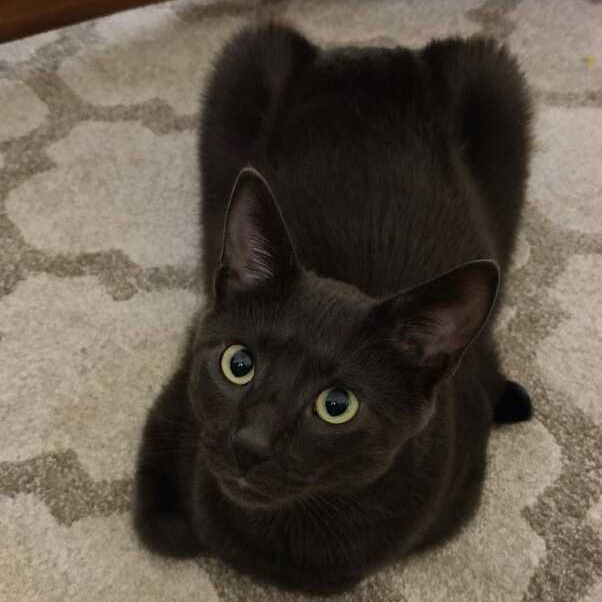
Galileo
​Lab Assistant
Research interests: Solar radiation effects on body temperature; bird behavior; nutritional value of hair-ties, pen caps, and earrings.


Proudly powered by Weebly
  • Home
  • People
  • Join
  • Research
  • Publications
  • News & Updates
  • Resources